
Campaign Strategy · Diagnostic Thinking
The Capacity Ceiling
Campaign
Diagnosing why a campaign failed, reframing the approach, and building a testing system that held up under real constraints. How I think, not just what I decided.
- Role
- Campaign Strategy & Diagnosis
- Scope
- Diagnosis, channel philosophy, testing framework
- Client
- B2B Healthcare Services Company
- Status
- Framework launched; second round cut short by a role change

01
The situation.
The company had run a similar campaign once before, and it failed for a specific, diagnosable reason. The brief wasn't to relaunch it with sharper creative. It was to find out why it actually failed, and build from that.
Before I propose anything new, I audit the old campaign against four questions:
- 01
Channel fit. Was this reaching people the way they actually search and evaluate, or just the way it was easiest to target?
- 02
Audience fit. Was this reaching the person who owns the decision, or someone adjacent to it?
- 03
Conversion path. Did the page traffic landed on actually ask for the sale, or was it built for a different kind of visitor?
- 04
Unit economics. Was cost per result trending toward sustainable, or away from it?
02
Reframing
the problem.
The failure was architectural: the wrong channel for how this buyer actually behaves, and no real path to convert once someone arrived. My response to that kind of failure is usually two structural changes.
- 01
Intent-based channels over demographic-guess channels, by default. A buyer who searches for a problem is raising their hand first. A buyer who merely fits a target profile on a platform is a guess.
- 02
Dedicated, funnel-matched landing pages with one explicit call to action, instead of routing every visitor to the same generic page that isn't built to close.
“Proof that something can be done isn't the message itself. The capability is the pitch. A specific example is just evidence that it's real.”
03
Campaign
architecture.
Resource reality often sets real limits: one strategist, one campaign, budget and timeline both still open. That kind of constraint shapes the structure as much as any strategic preference does.
My default is to keep the funnel unified at the top, one message, one entry point, and only fork by audience further down, at the point where the decision actually gets made. Building separate top-of-funnel messages for every buyer type triples the content workload for an audience that hasn't even self-selected yet. Forking early is a tempting way to feel thorough. Forking late is usually the more disciplined call.
04
Channel
philosophy.
My channel maps get built in parallel, one for organic and social, one for paid search, each with an explicit owner, a stated purpose per channel, and channels left out on purpose.
Saying no to a channel, with a stated reason and a condition for reconsidering it, is as much a part of the architecture as saying yes to one. A channel that fits the audience on paper, but has already failed to convert this exact buyer once before, doesn't get reintroduced on faith. It gets gated behind real data from whatever channel replaced it.
05
Jab and hook.
This is the part of my process I'd point to first if someone asked how I actually think, not just what I decided.
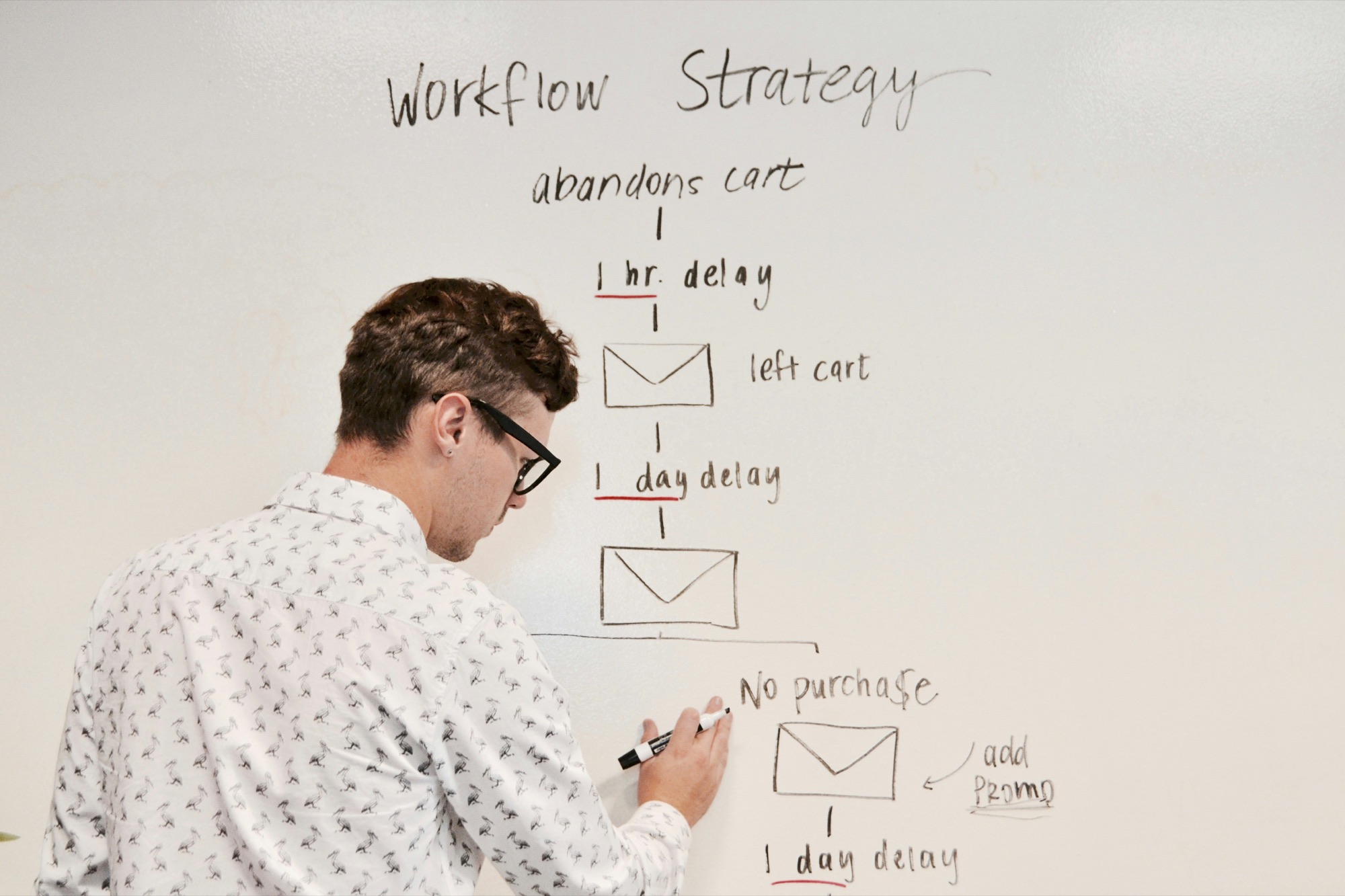
The textbook sequence is organic-first: let organic run, gather signal on what's working, then send paid in already informed. I believe in that model. Real timelines rarely allow for the several quiet months that ideal version assumes, so paid and organic often have to run at the same time. Rather than drop the principle because it doesn't fit the calendar, my approach is to build a compressed program that lets the two channels trade signal on a short, dated cycle instead of running blind past each other: paid performance shaping what organic publishes next, organic's early signal shaping where paid's next round of testing focuses.
06
Measurement
philosophy.
Revenue and cost-per-result targets aren't always locked before a campaign has to launch.
Rather than wait on that number to finalize an approach, my method is to build the measurement framework itself, what gets reviewed, on what cadence, against what standard, as final and independent of the target. The one number that always matters regardless of budget: whatever the new cost per result comes in at, it has to beat whatever the prior effort failed at. That's a structural floor, not a placeholder.
07
The catch.
The architecture and the testing system are one story. What happens once a paid campaign actually launches, with real spend and real ad groups, is another, and it's the part that tests whether the discipline in the strategy actually holds up.
This is a pattern I've caught before: real budget, real ad groups, real conversion tracking, not just a plan on paper, and still, once you audit where the ads actually ran, a cluster of low-quality, junk placements inflating both spend and the apparent lead count turns up, sometimes including a clearly fake form submission that got counted as a qualified lead.
My habit is to build placement-exclusion lists and correct the reporting before those numbers go anywhere near a stakeholder deck. I don't take my own dashboard's first answer as the truth. I check what's actually driving a number before I report it.
08
What this
demonstrates.
- 01
Diagnosing a failure to its actual mechanism, instead of prescribing a generic fix.
- 02
Designing channel strategy with explicit ownership and a stated reason for what's included and what's deliberately left out.
- 03
Holding onto a strategic principle under real-world time pressure by building a working, compressed version of it, rather than quietly abandoning it.
- 04
Finalizing a measurement framework independent of an unresolved budget number, while still carrying one hard performance floor forward from a prior failure.
- 05
Auditing my own results before presenting them, and fixing a data-quality problem rather than reporting a rosier number.
“I don't take my own dashboard's first answer as the truth.”
Next project